New ways to treat NF1 tumours with existing drugs
20 April 2023

Prof. Benjamin Housden and Dr. Megan Stevens
NF1 is one of the most common inherited diseases, affecting 1/3000 people worldwide. Despite a long history of research, there is currently only one available drug used in the clinic to treat NF1 tumours, which does not always work and can cause side effects.
We are working with Nerve Tumours UK to solve this problem and find new ways to treat NF1 tumours. This research is being performed by Dr. Megan Stevens and Prof. Benjamin Housden at the Living Systems Institute, University of Exeter, UK. (www.exeter.ac.uk/research/livingsystems).
A major problem in drug discovery is that drugs found in research labs often fail when tested in people. This is either because they cause side effects and are not safe for use or they simply don’t work as expected when tested in people. Over the past few years, we have been working on new ways to find drugs in the lab that have a higher chance of being safe and effective when used in the clinic.
A standard way to find new treatments for disease is to grow cells from patients with that disease in the lab and test many thousands of drugs on those cells to see which produce a positive effect. In the case of NF1 tumours, we would look for drugs that kill the tumour cells but that do not kill healthy cells from the same patient.
However, previous research has shown that drugs that work in cells in the lab do not necessarily work in people. Studying such drugs wastes a lot of time and delays the development of effective treatments. We take a different approach to find effective drugs. Instead of using human cells, we use cells from fruit flies. Fruit flies have been used for over a hundred years to study biology and many findings using these insects have resulted in new understanding of how human bodies work as well as how to treat disease. We grow fruit fly cells carrying mutations in the NF1 gene and use these to test existing drugs. At the same time, we test the drugs in healthy fruit fly cells and search for those that kill the NF1 mutant cells but have no effect on the healthy cells. Once we have found drugs that behave in this way, we move on to test them in human cells.
By using this approach, we can find drugs that work in two very different types of cells. Any drugs that only work in one type of cell are unlikely to be effective in the clinic. Our approach allows us to filter out all of the drugs that only work in some types of cell and the remaining drugs have a much higher chance of working when used in the clinic to treat NF1 patients. Our approach also involves focusing on existing drugs that are already used to treat other diseases. The advantage of this approach is that we already know these drugs are safe and so we can establish a new treatment for NF1 tumours much faster than if we were developing new drugs.
This work is still in progress but we have already found two existing drugs that are known to be safe for use in people. Both of these drugs kill NF1 tumour cells from fruit flies but do not kill healthy cells. In addition, both drugs work the same way in tumour cells from several human patients with NF1 tumours or MPNST tumours. These exciting results highlight the clinical potential of these drugs to treat NF1 tumours in patients.
We are now working with Nerve Tumours UK to develop these drugs towards clinical trials. From this work, we hope to bring benefit to NF1 patients in the near future by providing safe and effective treatments for NF1 tumours as well as MPNST tumours.
We would like to thank Nerve Tumours UK for their support and funding as well as the Medical Research Council (grant: MR/ V009583/1).
Research update
Inhibition of autophagy as a novel therapy for the treatment of NF1 tumours. We generated a Drosophila cell model of Neurofibromatosis type 1 and used this to search for potential drugs to treat tumors. We show that chloroquine treatment has a clear selective effect on tumor cells across multiple cell culture and in vivo model systems.
Filter News
Manchester University NF1 MEK Inhibitors Research
Research: NF1 MEK Inhibitors and Learning
Read More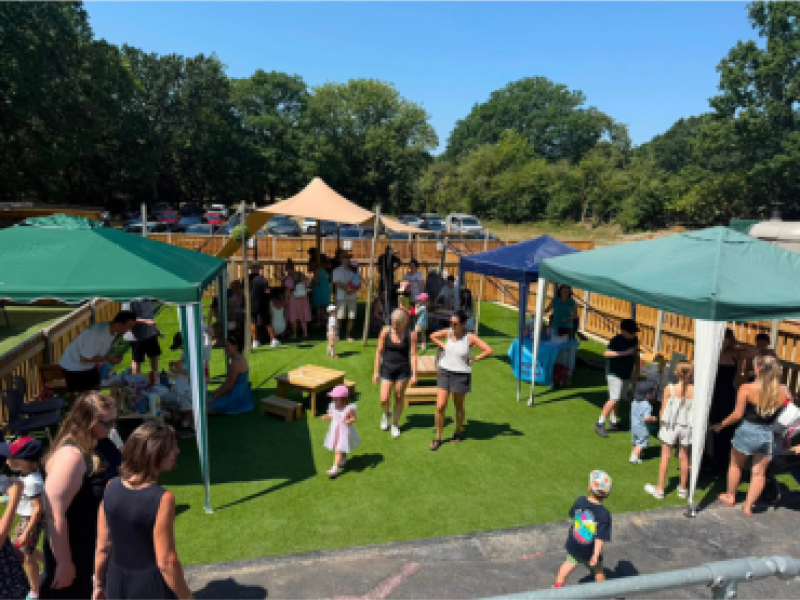
Toad Hall Nursery Fundraising Day
Toad Hall Nursery's annual fundraising day supported Nerve Tumours UK as 3 year old Lily has NF1.
Read More
Glasgow 2026 Everybody is born a Champion
This campaign features GB Para-Sprinter Thomas Young MBE, NTUK Patron, competing in the 2026 Commonwealth Games in Glasgow
Read More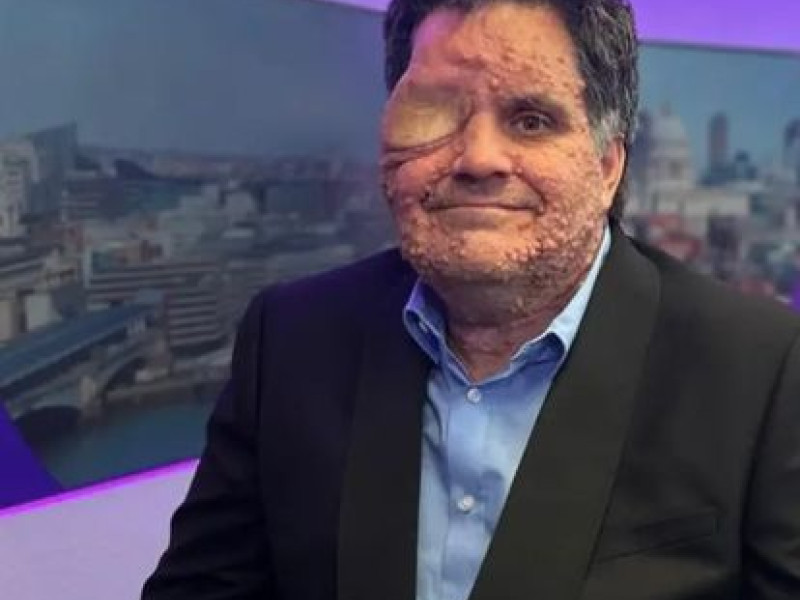
Oliver’s Blog
Oliver Bromley shares some personal experiences of visible difference, and how education and kindness can reduce stigma.
Read More
Talking with Thomas Young
Meet our Patron Thomas Young MBE and watch his video series introduction to the world of para-sport
Read More
Worshipful Company of Horners and Wingwalk fundraiser
NTUK was chosen as the Worshipful Company of Horners' Charity of the Year, and their Deputy Master is doing a wing walk.
Read More
Laura’s fundraising for Shine A Light 2026
Laura and her mum fundraised for World NF Day on Sunday 17 May.
Read More
Ralph’s NF1 Story
Three year old Ralph has NF1 and has been undergoing treatment to preserve his eyesight, read his story.
Read More
Mel’s Swimming Challenge
Specialist NF Nurse/ Advisor Mel Murrell is going to great lengths with her swimming challenge!
Read More