Bea’s Story: Courage and Resilience
02 March 2026

Bea's 12th birthday
Bea was diagnosed with Neurofibromatosis Type 1 (NF1) when she was five years old, following a life threatening seizure when she stopped breathing, which resulted in her being airlifted to hospital and placed in an induced coma, in intensive care, for three days.
When she was unconscious, the doctors looking after her noticed the cafe-au-lait marks and auxiliary freckling on her body. Following further tests and an MRI, it was established that Bea also has Lisch nodules in her eyes and a change in the white matter in her brain, which confirmed the diagnosis clinically before it was confirmed genetically from blood tests some time later.
This was a spontaneous mutation, as is the case with half of NF patients, as no one in our family had any history of the condition. Bea now has a 50:50 chance of passing it on to her own children.
Bea went on to have three further prolonged seizures, all requiring medication, emergency admissions, and overnight stays in hospital. After further tests, Bea was diagnosed as being photosensitive, as well as epileptic (one of the associated conditions that can occur with NF1), and is now on daily anti-seizure medication, which thankfully seems to have controlled her seizures.
Bea continues to have regular check-ups for her NF, and in 2021 was diagnosed with scoliosis and subsequently, an unusually rotated pelvis, which has sadly progressed to a point where Bea will need to have major spinal surgery.

Spinal surgery tends to be problematic in NF patients because of the weakness of the bones. Bea’s surgery is made even more complicated as she was found to have an extensive inoperable plexiform neurofibroma in her lumbar region, so has been referred to the Complex NF Clinic at Guy’s Hospital in London, and will be under their care for life.
Bea is extremely small and physically very immature for her age. She will never be as tall as she would have been without having NF and scoliosis, but she will have a growth spurt in due course, and that is when her progressive scoliosis could really cause a problem as it is likely that she will curve more at her periods of rapid growth.
Bea has been fitted with a full body brace to try to control the progression of the curve as she grows. She wears the brace for around 20 hours per day. It is extremely uncomfortable and she is in a lot of pain and very tired with it, but early signs suggest it is definitely helping to reduce the degree to which Bea curves as she grows, which is great news.
The decision was made that it would be more beneficial for Bea to wear the brace to try to give her chance to grow taller, stronger and older before she has to endure what is pretty horrific major surgery.
This extremely complex, rare, major spinal surgery, where it is highly likely that her spine will be fused from both the front and the back, also necessitates the need to move organs. This is to give Bea’s bones the best chance to fuse so that her supportive metalwork does not break.

Bea and sister Bonnie
In anterior surgeries, it is preferred to enter from the left but this is not possible with Bea as her tumour is on her left side and she curves to the right, where it is more tricky to navigate past the organs. After the anterior part of the surgery, Bea will then be opened posteriorly and also fused from the back. The recovery time for this major all-day spinal fusion is approximately a year, but it has been decided that this is the better way forward to hopefully reduce the overall number of surgeries which Bea has to endure.
The cardio investigations for Bea’s proposed surgery also showed that she has a small hole in her heart as well as a faulty mitral valve, both of which conditions need monitoring.
Bea suffers with constant pain, both musculoskeletal pain from the scoliosis and more acute nerve pain from the tumour, as well as the general unexplained pain of NF, which is in her legs, tummy, and back.
She had some mild learning difficulties and problems with speech development and pronunciation, which required speech therapy - all further hallmarks of NF.
In spite of all this pain, adversity, bad news, and depressing diagnoses of conditions and complications without an easy treatment or cure (or none at all), Bea has remained the most delightful, positive, stoical, brave, modest, happy and cheerful little girl, who is known by all as someone who never stops smiling, and who never lets these setbacks dampen her mood or outlook on life. Beatrice means “Bringer of Joy’ and she could not have been given a more perfect name, as that is what she does every single day.
Bea has an older sister, Bonnie, who takes her big sister responsibilities extremely seriously and is so loving and caring towards Bea. They are very close indeed.

Bea and Bonnie in 2025
When Bea was diagnosed with NF1, we were told to contact Nerve Tumours UK for the most accurate and non-sensationalised information to try to understand what might lie ahead for Bea, rather than searching the internet.
The charity offers invaluable support and advice for patients, families, and teachers with all aspects of living with NF. We are eternally grateful that Bea’s family, friends, teachers and so many people around her have also become very much aware of this relatively rare condition, and have learnt so much about it in order to support and understand Bea, and the challenges she and other NF sufferers face.
Fyling Fest Fundraiser
Our family has supported Nerve Tumours UK since Bea’s diagnosis and they have supported us. I have spoken to Rebecca as well as Rachael in the North East, and Carolyn Smyth. From being diagnosed with a condition of which we were previously utterly unaware, and have subsequently had to learn all there is to know, Nerve Tumours UK has always been there to offer measured and extremely informed advice and reassurance in what has been, at times, a bewildering journey.
We are very grateful for all the work they do to support those affected by NF in such a huge variety of ways, throughout the challenges the condition presents at all stages of life, and we are proud to continue to support the wonderful work that the charity does.

Specialist NF Nurses
Our Specialist NF Nurses are here for you! See if there is a Support Specialist in your area.
Find out more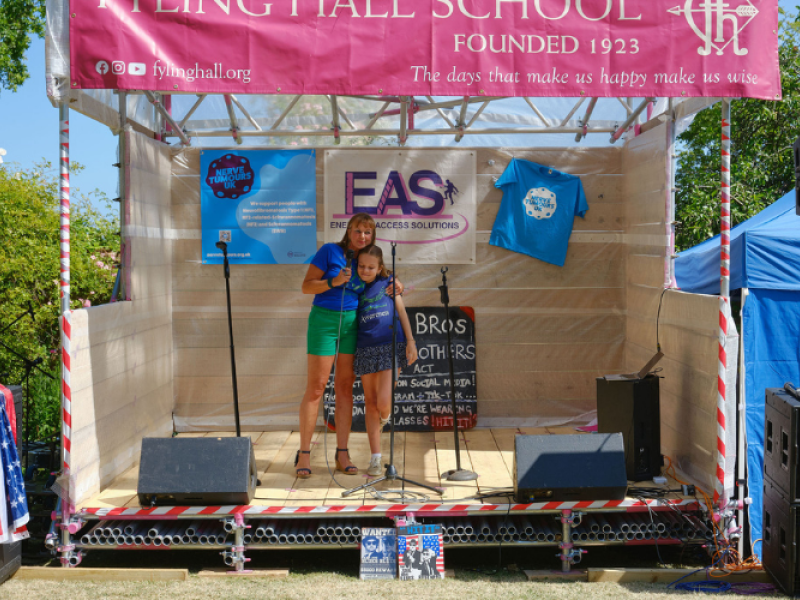
Fyling Fest Fundraiser
Fyling Fest 2025: Sunshine, music & a whole lot of heart in the Rose Garden - all in support of Bea
Find out more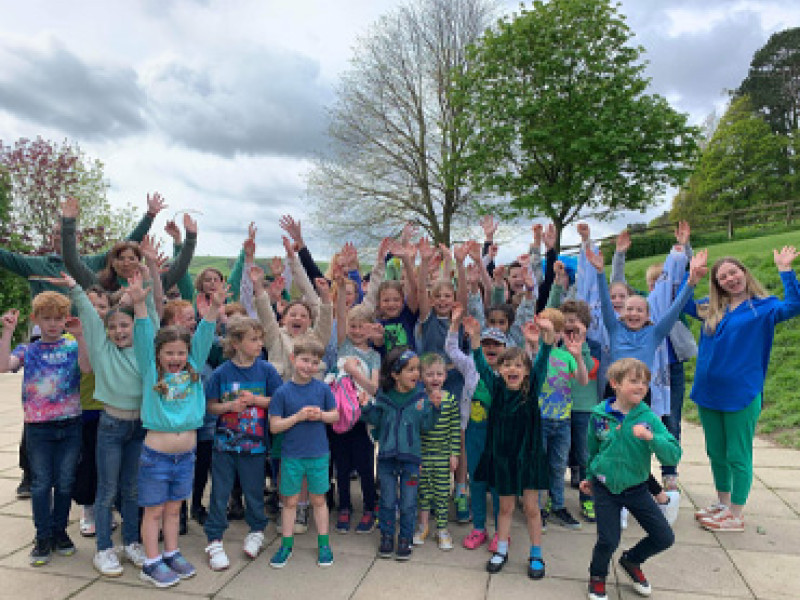
NF Awareness Day Fundraiser at Fyling Hall School
Bea's school held a blue & green themed fundraiser on World NF Awareness Day
Find out more