Oliver Bromley - Reflections of 2025 - Outlook to 2026
15 December 2025

“Looking back, looking forward – A year in the life of the NF community”
As we turn the page on another year, I always find it helpful (and cathartic) to stop, take a breath, and reflect on what has been, both in my own life and the wider community of people living with NF1 and nerve tumours. I hope this offers both a snapshot of where we are and a compass pointing to where we might go next. I will reflect on developments in medical research, conferences that took place and new approaches to care that have been raised in 2025; sharing my opinion and hope for the future with the NF community and anyone involved.
1) The year that was:
For me personally, 2025 was a year of ups and downs, many familiar to those with NF1: the surgical scars, the appointments, the questions, the “why me?” moments, the humour (because let’s face it, when your body surprises you, sometimes laughter is the best medicine) and the faith that carries you through. I have carried my story from South Africa to the UK, from surgeries, to speaking engagements, to being involved in an exciting movie (more on this in the future), sitting for two very prominent portrait photographers and growing my online social media advocacy presence. I remain grateful to the broader NF community who have supported me on this journey. On the wider NF1 / nerve tumour front, this year has brought real momentum.
Here are a few highlights:
- The 2025 NF Conference (hosted by the Children’s Tumor Foundation) convened scientists, clinicians, industry and patients in Washington D.C., and the theme was loud and clear: we are moving into a new era for NF.
- A major new gene therapy vector developed by the Johns Hopkins Medicine team, a teaching and medical research centre in the US. This offers hope for targeting NF1 tumours.
- Funding flows keep growing: for example, the Gilbert Family Foundation awarded an $8 million grant to the Children’s National Hospital to accelerate NF1 research.
- On the treatment front, mirdametinib (also known by brand names like Gomekli/Ezmekly) has made headway in the treatment of adult and paediatric patients with symptomatic, inoperable plexiform neurofibromas (PNs) in NF1, following FDA approval in early 2025. Although it must be noted that the medication is not currently licensed for use for either children or adults in the UK.
- Improved data sharing and tumour biology insight: one significant publication this year analysed over 100 tumour samples from NF1-associated peripheral nerve sheath tumours and made a large genomic dataset accessible to researchers, published in Springer Nature Open Access and based on a global co-operation of researchers and institutions.
- The UK charity Nerve Tumours UK continues to grow its support in research, outreach, and patient empowerment programmes, including ongoing support for the EDEN study, a UK based longitudinal project following infants and children with NF1 and families where a parent has NF1.
- On the advocacy/community side, the NF Academy 2025 offered young people from around the world an immersive week of learning, leadership, and connection, hosted in Barcelona as a week-long ambassador training programme. Nerve Tumours UK’s ambassador Georgia Baum attended this course. She is one of the NTUK Ambassadors.
So yes: there is reason for optimism. The pace of change is faster than it has been in many years, and the voices of those living with NF1 are finally increasingly at the table.
2) What is most exciting to me:
As someone who lives this life daily, there are a few developments I find especially meaningful:
- Adult treatment options: Historically many of the therapies for NF1-associated tumours focused on children. The fact that adult patients (with symptomatic, inoperable PNs) are now being offered licensed treatments, albeit not yet in the UK, may turn out to be a game-changer in the long-term.
- Precision medicine and gene therapy: What the Johns Hopkins team did, creating a targeted vector for NF1 tumour biology, gives me hope that we’re moving beyond “one size fits all” and toward treatments tailored to our biology.
- Data and collaboration: That tumour biobank and genomic data set (over a hundred samples) means that researchers worldwide can dig deeper, test hypotheses faster, and in the long run we patients benefit.
- Patient-centred care and outreach: Trials that can be done partly from home (decentralised trials) and educational resources for patients and their doctors are making research more accessible. At recent NF meetings there has been growing focus on AI tools, smarter imaging and precision approaches for tumour monitoring and treatment planning.
- Youth leadership and advocacy: The NF Academy and other programmes empower young adults and teens living with NF1 to become leaders, advocates and storytellers themselves. That matters and gives the next generation a voice.
3) Hopes for the future
If I were to wish for things in the year ahead, and I think the community would stand with me, they would be:
- Wider access to approved therapies globally. It’s one thing for a drug to be approved, another for patients in the UK (and beyond) to have timely access, reimbursement, and support.
- Better early detection and monitoring tools. The earlier we can detect tumour growth or malignant transformation, the better we can intervene. Advances in imaging, biomarkers and AI-driven tools for segmenting and tracking tumours are already being discussed in the NF research community, including at this year’s CTF Conference.
- Holistic care for the full person. NF1 is not just “tumours”; it’s learning differences, pain, appearance diversity, psychosocial impact, discrimination. My hope is that as treatments advance, we don’t lose focus on the lived experience: the humour, the faith, the community, the love and belonging.
- A cure-oriented mindset. This doesn’t mean abandoning supportive care; rather, increasing ambition and resources so that one day we talk about “curing” or fundamentally altering the NF1 tumour trajectory rather than just managing it.
4) A message to the community
To every person reading this, whether you live with NF1, you care for someone who does, you’re a friend, a clinician, a researcher, or an advocate, thank you. I know the weight of this journey is real. I know the sleepless nights wondering “what’s next?” I know the scars, visible and invisible. But I also know this: you are not alone. I am not alone. And the NF1 community is strong. Because we share stories, we build each other up, we campaign, we laugh at the absurdities of surgery and appearance and human error, we pray, we hope, and we act.
For me, as a writer, speaker, husband and believer, my Christian faith reminds me that hope is more than “good optimism”, it’s a firm belief that even in the darkness, we are seen, we are valued, and our stories matter. So as we face the new year together, let us carry that hope into every consultation, every trial enrolment, every gathering, every blog post and every conversation.
5) In closing
2025 has brought more progress for the NF1/nerve tumour world than many of us expected a few years ago. But the journey is far from over. The tunnels we navigate (both literal and metaphorical) will still have bends. There will still be bad news days, scans that worry us, surgeries that challenge us, and moments where we ask “when will things be better?”
My hope for 2026 is that we walk into it together: researchers and patients’ side by side; community and clinicians listening to each other; hope and realism hand in hand. I believe, deep in my bones, that the coming years will bring treatments we’ll look back on and say: that was the turning point.
Thank you for being part of this journey with me. Let’s step into next year with courage, laughter, advocacy, and faith.
Wishing you all a peaceful end to 2025 and a hopeful beginning to what comes next.
With warmth,
Oliver Bromley
Disclaimer
Nerve Tumours UK provides a space for authors to showcase share their personal opinions, experiences, and perspectives. The views expressed in these posts are those of the individual authors, and do not necessarily reflect the views or policies of Nerve Tumours UK.
Nerve Tumours UK is not responsible for the accuracy, completeness, or reliability of any information or opinions presented by blog contributors. Blog content should not be considered medical or professional advice. For guidance relating to health or medical concerns, please consult a qualified healthcare professional or contact our helpline: Mon, Wed, Fri 9am to 5pm (07939 046 030 or Freephone 03001021722)
If you have any questions for the author regarding the published content, please email info@nervetumours.org.uk and we will forward.
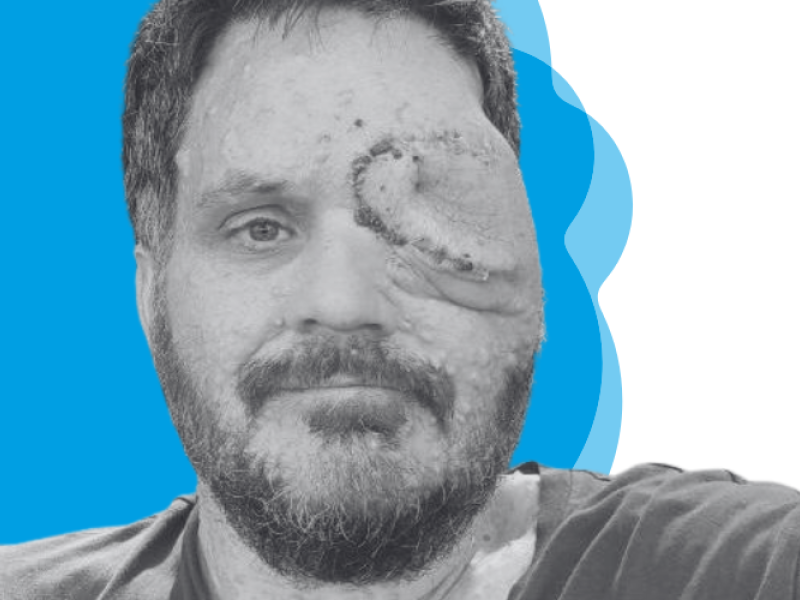
Oliver Bromley’s NF Story
Oliver, who was asked to leave a restaurant due to his appearance, chooses to turn discrimination into a call for awareness
Find out more
Nerve Tumours UK Helpline
Give our Support Specialists a call on Mondays, Wednesdays & Fridays 9am-5pm. Find out more here:
Find out more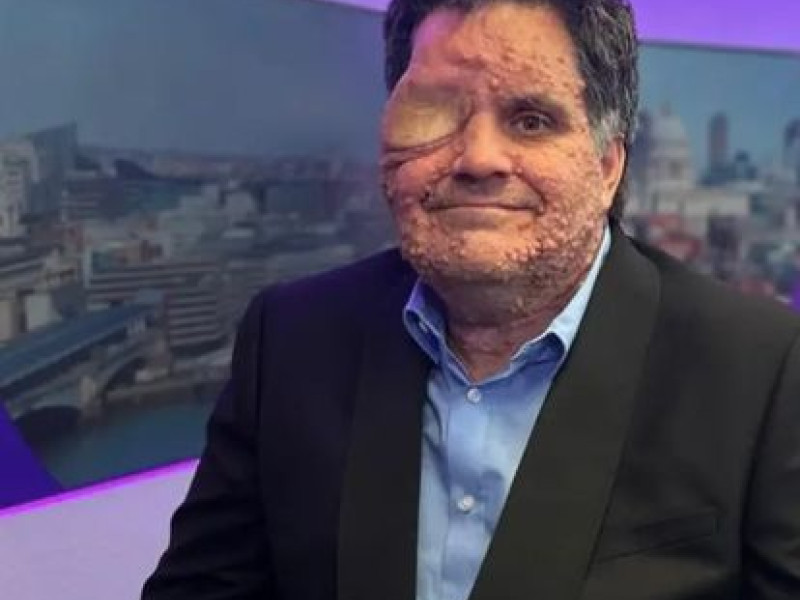
Oliver’s Blog
Oliver Bromley shares some personal experiences of visible difference, and how education and kindness can reduce stigma.
Find out more