Understanding Neurofibromatosis Type 1 (NF1): A surgeon’s thoughts
16 October 2025

Some thoughts from a surgeon treating patients with Neurofibromatosis Type 1
Hello, my name is Mr. Chris Duff. I'm a plastic surgeon working in a large team of doctors in Manchester, England. We are here to help people who have Neurofibromatosis Type 1, also known as NF1. We also see people with NF2-related Schwannomatosis, also known as NF2, and Schwannomatosis.
We have special clinics for people who need extra help because of their NF1. Our goal is to:
- Find out if you have NF1, or if you have a new health problem related to it.
- Keep a close eye on your health using our medical knowledge and special tests.
Our team is made up of many different doctors and specialists, all working together. We have experts who focus on:
- Genes (Genetics)
- The brain and spine and nerves (Neurology, Neurosurgery, Spinal Surgery)
- Bones (Orthopaedic Surgery)
- Skin (Plastic Surgery)
- Kidneys and bladder (Urology)
- Cancer (Oncology, Neuro-Oncology)
- Special scans and tests (Radiology)
We also work with nurses, psychologists (who help with feelings), and physiotherapists (who help with movement).
Questions You Might Have
Here are some common questions we hear, with simple answers.
1. I think I might have NF1. Who should I talk to?
Some people know they have NF1 from a young age because it runs in their family. Others might be diagnosed as children or even later on. You should always start by talking to your family doctor. They can send you to a specialist who can help.
2. I have lots of skin lumps (neurofibromas). Can they be removed?
Many people with NF1 have small, soft lumps on their skin. Sometimes, they can get in the way of your clothes or your work equipment. If these lumps bother you, you can talk to your family doctor about them.
3. I have a new lump that is painful. Is this a problem?
Lumps related to NF1 usually grow very slowly or not at all. If you notice a lump that suddenly gets bigger or becomes painful, it's very important to tell your doctor right away. While most of these lumps are not serious, we want to check any new problems quickly.
4. I have NF1. Will I pass it on to my children?
If you have NF1, there is a 50% chance (a 1 in 2 chance) that you will pass it on to each of your children. There are special tests and procedures that some people can use to reduce this risk, but they may not be available everywhere.
5. I was told I have "mosaic NF1." What does that mean?
This is a special kind of NF1. It means that not all the cells in your body are affected. For example, the condition might only affect one part of your body, like one arm or leg. The problems you have in that area can be the same as someone with full NF1. The chance of passing this type on to your children is much lower—only about 1% (1 in 100).
If you have any questions, please contact us - we are here to help. Our Helpline is available on Monday, Wednesday and Friday 9am-5pm. Call 07939 046 030/ Freephone 0300 102 17 22 or email helpline@nervetumours.org.uk.

Helpline
Give our Support Specialists a call on Mondays, Wednesdays & Fridays 9am-5pm. Find out more here:
Find out more_6_800_600_s_c1.jpg)
Specialist NF Nurses
Our Specialist NF Nurses are here for you! See if there is a Support Specialist in your area
Find out more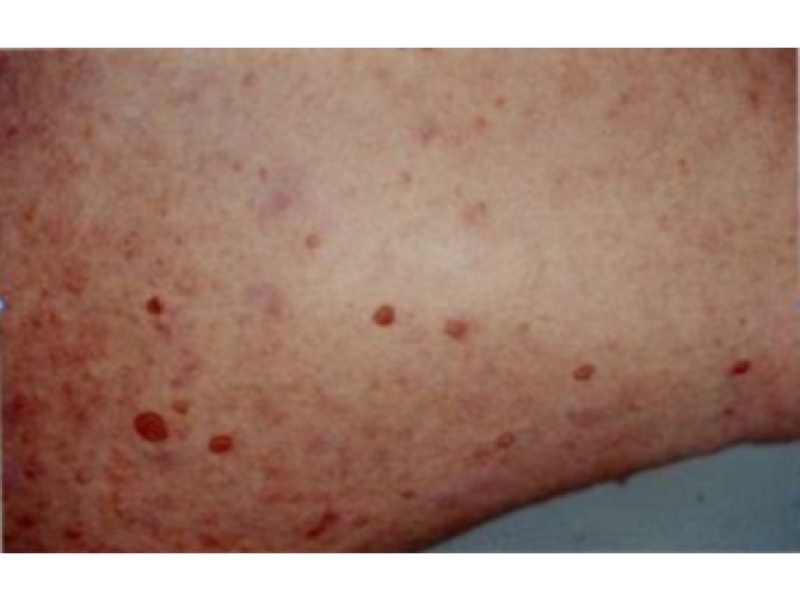
Understanding NF1: A guide to skin neurofibromas and their treatment
This guide is for people with NF1 and explains what neurofibromas are and what treatments might help.
Find out more