Raising Awareness Georgia’s Blog
25 January 2026
Hello! My name is Georgia Baum. I’m from Liverpool, I’m 25 years old, and I’m an Ambassador for Nerve Tumours UK. I first became actively involved with NTUK in 2021 after experiencing a major health scare, when I was told the year before that something had grown on my brain. I turned to the charity for support and guidance during a very uncertain time, and little did I know that this would grow into such a beautiful collaboration, one that has truly changed my life for the better.
A little bit about me outside NTUK; I love to read, especially a good thriller or mystery, and I’m always looking for new ways to be creative. My current goal is to learn how to crochet. I’m also a big football fan, particularly Liverpool (like our Director Karen, of course!), and I was lucky enough to have a season ticket for 12 years. I love to cook too and am very partial to a good fajita (who doesn’t love fajitas?!)
I decided to write this blog to help ensure that information is shared in an accurate, accessible, and light-hearted way. When living with a condition like NF or SWN, or supporting a loved one who is, it’s easy to become consumed by the negatives and the ‘what ifs’. My hope is that this blog can be a safe space that also highlights the positives: the progress being made in medical research and science, the active changes happening behind the scenes, and the small wins along the way. I’ll also be keeping you updated on NF/SWN news and sharing any adventures I might get up to along the way.
I hope this blog can be both informative and fun, while keeping you connected to everything happening within the NF/SWN community. Most of all, I hope you’ll enjoy learning alongside me as we continue to #ShineALight on NF.
Disclaimer
Nerve Tumours UK provides a space for authors to showcase share their personal opinions, experiences, and perspectives. The views expressed in these posts are those of the individual authors, and do not necessarily reflect the views or policies of Nerve Tumours UK.
Nerve Tumours UK is not responsible for the accuracy, completeness, or reliability of any information or opinions presented by blog contributors. Blog content should not be considered medical or professional advice. For guidance relating to health or medical concerns, please consult a qualified healthcare professional or contact our helpline: Mon, Wed, Fri 9am to 5pm (07939 046 030 or Freephone 03001021722)
If you have any questions for the author regarding the published content, please email info@nervetumours.org.uk and we will forward, as appropriate.

February 2026
Rare Disease Day: Spotlight on Equity and Access to Care
Rare Disease Day provides a vital moment to Shine A Light on equity and access to care for people living with rare conditions, including Neurofibromatosis: NF1, NF2-SWN and Schwannomatosis (SWN). It brings visibility to the shared challenges faced across the rare disease community and reinforces the importance of informed, coordinated and consistent support, grounded in collaboration, lived experience and collective advocacy.
Genetic Alliance UK (GAUK) brings together over 200 charities and support groups at a national level, with more than 30 years of experience working to improve the lives of people affected by genetic, rare and undiagnosed conditions across the United Kingdom (UK). Although certain individual conditions are uncommon, together they affect around 3.5 million people across more than 7,000 conditions, meaning 1 in 17 people are affected by a rare condition living in the UK. By uniting organisations of all sizes, GAUK ensures these voices are heard and works to advance equitable access to diagnosis and care, patient-informed research, public understanding, and trusted information and support. Through initiatives such as Rare Disease UK, it provides a strong, unified voice for the community.
Within this collective effort, Nerve Tumours UK (NTUK) supports individuals and families affected by NF and SWN. As a member of GAUK, the charity contributes specialist knowledge and lived experience, helping to strengthen awareness, improve access to care and support better outcomes for those living with such conditions.
Equity and access to care should not be a privilege, they are a right. For people living with rare conditions, the difference between timely diagnosis and delayed support can shape their entire lives. Yet too often, access to specialist expertise, coordinated care, and reliable information is inconsistent, leaving families navigating uncertainty alone. True equity and access to care means every individual, wherever they live, can receive the care, guidance, and support they need to live with confidence, dignity, and hope. However, unfortunately this is not the case for some NF and SWN patients.
In relation to NF1, a 2025 UK-based study involving patients and caregivers highlights significant and ongoing shortcomings in equity and access to care. 54% reported dissatisfaction with the NF1 care they received. Alarmingly, only 42% were able to access specialist services within six months of diagnosis, leaving the majority facing prolonged and often distressing delays at a critical time. The study also revealed substantial gaps in support and signposting, with just 30% of participants being directed to relevant charities or helplines, underscoring a broader lack of awareness of vital support services. 45% reported difficulties accessing healthcare professionals with NF1-specific expertise, further compounding feelings of uncertainty and abandonment. Most concerning, 69% of participants believed that key healthcare providers and care coordinators lacked the necessary knowledge, resources, and financial support to effectively deliver NF1 care. Collectively, these findings illustrate not only systemic failures in service provision but the profound emotional and practical burden placed on individuals and families living with NF1, reinforcing the urgent need for improved awareness, investment, and specialist-led care pathways.
Achieving this requires a system that listens to lived experience, like the collaboration between NTUK and GAUK, that values specialist knowledge, and connects patients with the right care at the right time. It means breaking down barriers between services, fostering collaboration across healthcare, research, and support organisations, and ensuring information is clear, accessible, and tailored to individual needs. By addressing these gaps, the rare disease community can move closer to a future where care is consistent, inclusive, and truly patient-centred. And that is what Rare Disease Day aims to promote.
From my lived experience with NF1, equity has often been absent in both educational and healthcare settings, where limited awareness of the condition has led to persistent misunderstanding, minimisation, and dismissal. During my time in school, my parents were repeatedly required to explain and justify my needs in environments lacking informed understanding of NF1, resulting in inconsistent or delayed support. My “personality” and “chattiness” were frequently framed as behavioural issues, and I was often reprimanded without fully understanding what I had done wrong; years later, I was diagnosed with ADHD, affecting around half of individuals with NF1, which went entirely unrecognised in school, further eroding any sense of equity. This pattern has continued in healthcare, where I have had to recount my medical history to multiple professionals, only for my concerns to be minimised or dismissed due to insufficient knowledge of NF1 and its highly variable presentation. I have frequently been told that issues I present with have “nothing to do with NF,” only for it to later become clear that they were directly related, leading to delayed support. The cumulative impact of this repeated justification and dismissal has been emotionally exhausting and has contributed to delayed recognition of need, erosion of trust, and ongoing inequity for those living with rare conditions.
When individuals receive the right care at the right time, the difference can be transformative. Timely diagnosis, coordinated treatment, and access to specialist expertise not only improve health outcomes, but also provide patients and families with confidence, reassurance, and the ability to plan for the future. For people living with NF and SWN, correct care can reduce uncertainty, minimise complications, and empower them to live fuller, more independent lives. By combining clinical excellence with informed support and clear information to help ensure that equity in care becomes more than a goal, it becomes a reality.
If you require support in informing those around you about your condition, the iNForm collection offers a comprehensive range of accessible information. Regardless of where you are in your journey, NTUK provides resources designed to help you navigate daily life and improve understanding of NF1 among individuals, families, and wider communities.
Turning awareness into meaningful change requires coordinated action at every level of the healthcare system. This includes sustained investment in specialist NF and SWN services, the development and implementation of nationally consistent care pathways, and mandatory signposting to trusted charities and support services at the point of diagnosis. Healthcare professionals and care coordinators must be equipped with the specialist knowledge, time, and resources required to deliver informed, compassionate, and coordinated care. Crucially, people with lived experience must be actively involved in service design, evaluation, and research, ensuring that care systems reflect real needs and deliver equitable outcomes for all.
Rare Disease Day is not only a moment for reflection, but a call to action. It is an opportunity to reaffirm that people living with rare conditions such as NF and SWN should never be left behind or treated as an exception within the healthcare system. Equity in care means consistency, understanding, and timely access to expertise, regardless of postcode or diagnosis. By working collaboratively across charities, healthcare providers, researchers and policymakers, and by placing lived experience at the centre of decision-making, we can move closer to a future where equity and access to care are not aspirational ideals, but lived realities for every individual affected by a rare condition.
References
https://geneticalliance.org.uk/who-we-are/
https://geneticalliance.org.uk/who-we-are/what-we-do/
https://bmjopenquality.bmj.com/content/bmjqir/14/3/e003383.full.pdf

January 2026
I am honoured to share that I was accepted and successfully completed the 2025 Fall Edition of the Patient Advocacy Academy, a specialised programme delivered by the EDU Healthcare Education Institute and Adrian Goretzki - the founder and president of the foundation. Over a 21-day period, I engaged in an online training course designed for patient organisations that focus on rare-disease communities. Within the academy, there were 42 charity organisations covering 31 counties, which was astonishing to see how many people affected globally by rare diseases had the same story, just with a different author.
The Institute is recognised for its commitment to strengthening global healthcare through evidence-based education, high-quality training, and the advancement of patient-centred advocacy. What makes their work so significant is their focus on communities that are too often overlooked - particularly individuals living with rare diseases. From the academy, it reinforced the message that patients with rare diseases frequently face delayed diagnosis, misdiagnosis and feel there is limited awareness and gaps in care when it comes to their condition outside of their organisations.
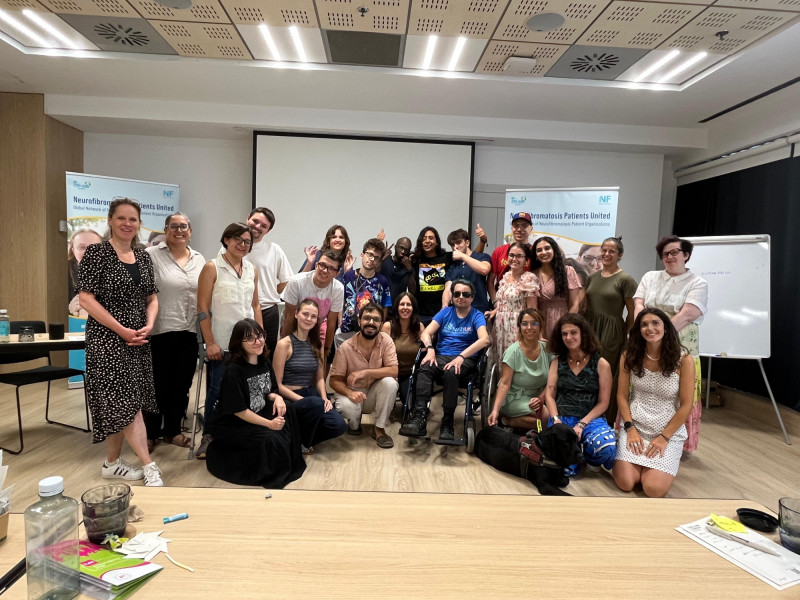
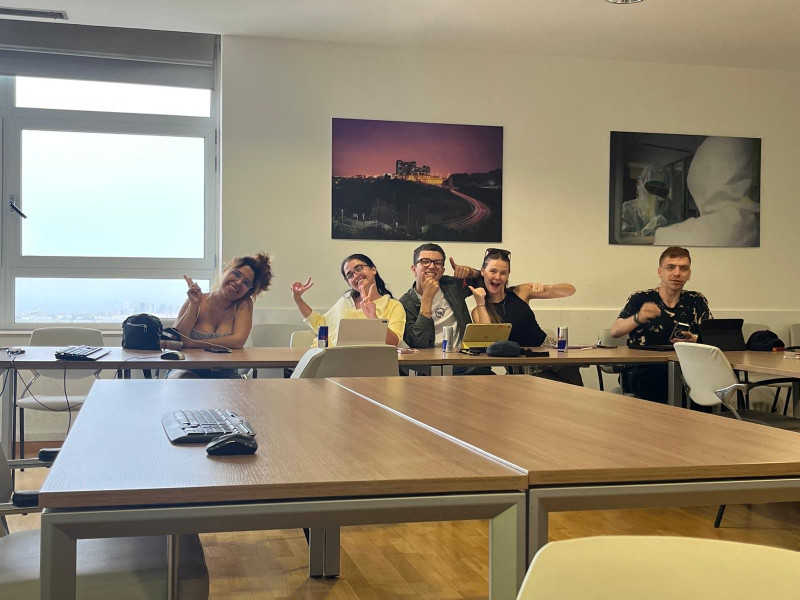
Photos - NFAcademy 2025
The institution's mission was to address these challenges by empowering those of us who advocate for our organisation through:
- Scientific Insight; Research and analysis that deepen understanding of the realities faced by rare-disease patients.
- Advocacy Excellence; Strategies to support equitable access to effective treatments and high-quality, person-centred care.
- Education and Leadership Development; Practical tools designed to strengthen the impact of patient organisations.
- Healthcare Professional Training; Guidance that helps clinicians build stronger, more responsive relationships with patients.
- Collaborative Exchange; Opportunities to learn from experts, stakeholders, and advocates who share a commitment to advancing rare-disease support.
This year was especially significant, as it marked the first time the Academy invited representatives from the NF community. I had the privilege of participating alongside the wonderful Sofia Casal Silva from Neurofibromatosis Patients United, who so beautifully dedicates her life to supporting her equally wonderful husband, Joao, and the NF2-SWN community, Andreu Coy from the Catalan Neurofibromatosis Association in Barcelona and Roussetia Nikoliadou from Ζωή με NF (NF Greece) in Greece. Our shared experience highlighted the profound power of community, collaboration, and collective learning. Bringing together advocates from different countries and perspectives strengthened understanding of the challenges faced by patients with NF globally, and reinforced the importance of working together to create meaningful, lasting change, and really did generate conversations and Shine A Light On NF!
Day 1 - 4: Academy Kick-off and Facebook Group Warm-Up.
The first four days served as an engaging introduction to the Academy experience. Participants had the opportunity to introduce themselves, share personal stories, and provide insights into country-specific situations relevant to the Academy’s focus. This initial phase encouraged connection and community-building, allowing members to express their expectations, hopes, and goals for the program before diving into the core Academy content. It set the tone for collaboration, learning, and mutual support throughout the course, and gave us all the opportunity to become familiar and comfortable with one another. The group page really had a beautiful sense of community.
Day 5
This day was called ‘Patient Organisation vs. A Company’ and focused on planning, goal-setting, and effectively managing activities and projects. Adrian explained how to interpret corporate strategies and apply them meaningfully within our own practice. We explored key responsibilities, how to structure and plan activities, ways to broaden our skillset, and the essential role of clear communication. The seminar also emphasised building a sustainable and impactful future, maintaining professionalism and clarity while also looking after our own mental health, and making purposeful use of social media and newsletters to benefit the wider community, which Nerve Tumours UK does so beautifully already.
Day 6
The session, titled ‘Yearly Planning - Why Does It Matter?’ led by Bernadeta Prandzioch-Goreztzki, emphasised the fundamental role of strategic planning in strengthening organisational skills and professionalism at every stage of advocacy work. Bernadeta outlined how effective planning has been shown to enhance awareness-raising efforts, support patient and clinician education, and improve communication across all involved stakeholders. As an ambassador, I found this to be vital in efforts of getting people to listen, and to hear you. She also provided a clear three-step planning framework, accompanied by practical resources to help us plan more effectively, reach our intended audiences, and engage hospitals and MPs in our efforts. As Bernadeta noted, “passion without direction can lose its way,” underscoring the essential role that structured planning plays in getting the most from supporting rare disease organisations.
Day 7
‘Setting Goals That Help You Grow,’ delivered by Anna Szychulska, underscored the significance of establishing clear goals and aspirations to maximise the impact of one’s role. As an ambassador, my personal and principal objectives are to enhance public awareness and to advocate for the broader recognition of NF within educational systems. Anna highlighted that one effective approach is to develop materials aligned with national policies and tailored to the appropriate age groups, thereby supporting sustained professional development and meaningful progress. This is the direction I will be prioritising moving forward, enabling me to communicate my message with greater clarity and eloquence.
Day 8
We held a check-in meeting this evening, marking our second official virtual session. This provided an opportunity for each of us to reflect on our current feelings and to share our hopes and aspirations for our respective charities. A clear, collective sentiment emerged: we are united in our desire to create meaningful and positive change in the world. Following this discussion, we commenced our lesson of the day, ‘Project Planning - Core Principles.’ Adrian delivered a highly informative and practical session, offering valuable guidance on the key components required to execute a successful project. He outlined the significance of continuous professional development and emphasised the importance of strategic, well-structured planning.
Day 9
Planning an Awareness Campaign - From Idea to Impact’ explored the importance of raising awareness around rare diseases through a range of thoughtful materials, strategies, and approaches designed to maximise limited resources. As an ambassador, awareness is central to my role, so this session resonated with me deeply and renewed my motivation. Bernadeta shared detailed insights from her own experiences in developing awareness campaigns, outlining both the benefits and the challenges. She emphasised that commitment and enthusiasm are the key drivers of meaningful impact. Importantly, she highlighted how effective awareness efforts can directly improve the lives of patients and their families; by fostering understanding, increasing visibility, and helping people feel seen and supported. Her honesty and expertise were incredibly valuable and have inspired several ideas for future initiatives I hope to develop myself.
Day 10
In ‘Planning an Effective Media Campaign - Step by Step,’ Anna delivered a clear, practical, and highly effective guide on how to encourage public engagement and reach the widest possible audience. She emphasised that “the greatest challenge about living with a rare disease is simply being seen and heard,” and illustrated how strategic media engagement can break through silence and amplify one’s voice. Anna further highlighted that “rare diseases are public issues that should not be ignored,” reinforcing the importance of strong and targeted communication. She provided valuable guidance on how to maximise outreach to different media professionals, tailoring messages appropriately for each platform and grounding all recommendations in current laws and legislation. Additionally, Anna underscored the power of storytelling and collaboration, explaining that sharing lived experiences and working alongside as many people as possible significantly strengthens any campaign; something Nerve Tumours UK already models beautifully. This session inspired me to develop future plans with renewed strategic focus to ensure our NF community is never left unheard or overlooked.
Day 11
In the lecture ‘How To Prepare Educational Materials That Work Well’, Adrian emphasised that “education is always important for people living with [a] rare disease. It can even be life-changing.” I fully concur, which is why a substantial aspect of my work as an ambassador is dedicated to educational outreach. Education is a vital mechanism for fostering understanding; however, as Adrian noted, there is “no such thing as a one-sized-fits-all” approach. This underscores the necessity of tailoring educational methods to the specific needs of different audiences. Adrian also detailed a variety of tools and strategies that can be employed to enhance the effectiveness of educational materials and extend their reach. His guidance was highly informative and will undoubtedly support my continued development within this role.
Day 12
On this day, we took part in a meeting with Adrian to review how the training is progressing and to discuss our main concerns about how our conditions are perceived in society. This provided a space for us to share specific issues we regularly encounter. I explained that NF is still not widely recognised, including within parts of the medical field, which often leads to misunderstandings or a lack of awareness, and I discovered the other participants felt the same about their conditions, even though we all come from different parts of the world! We also talked about how the training can support us in addressing these challenges by improving our confidence, strengthening our communication skills, and helping us represent our conditions more effectively. The session was a useful opportunity to reflect on what we hope to gain from the programme moving forward.
Following this, we attended our daily lecture, ‘Planning and Organising Successful Patient Meetings’, which highlighted the importance of community and connection, emphasising the value of reminding patients that they are not alone. Adrian outlined the various types of patient meetings and discussed how to tailor each format to the specific needs of a community or audience. Bernadeta then expanded on how to ensure that materials and communications remain relevant, engaging, and easy to understand while staying grounded in accuracy and clarity. Throughout the session, the importance of fostering positive, encouraging communities was consistently reinforced, with a strong focus on keeping patients at the centre of all discussions and planning.
Day 13
The insights shared in ‘How To Prepare Useful and Engaging Training Sessions For Volunteers’ were particularly impactful; Anna explored how to communicate effectively with individuals at varying stages of knowledge and outlined the value of engaging in high-quality training. I fully agree with this perspective, as the training I received from the EDU Institute and at the NFPU in Barcelona in August has significantly strengthened my confidence and expertise as an ambassador. Anna also emphasised the importance of accessibility when planning venues, which stood out as a key takeaway for me. It reinforced the need to ensure equal opportunities for all participants and, as Anna expressed, that everyone should “feel valued”. This session also inadvertently gave me a promising idea for a fundraising event in 2026.
Day 14
The video-sessions concluded with the session ‘How To Plan Everyday Work In Your Organisation’, which offered a thoughtful reflection on the essential, often unseen, tasks that sustain a charity’s effective operation. I fully agree that the dedication of individuals such as Karen Cockburn, Markus Bell, Alison Lobo, Rob Pierce, James Yelland, Navasha Wray, Rosalie Ryce, Sarah Harris, and many others is fundamental to NTUK’s continued success. Adrian further highlighted how the diversity of a team’s backgrounds and skill sets contributes to organisational efficiency and cohesion. This session provided a valuable perspective on the considerable effort required to maintain patient organisations, reinforcing my respect and appreciation for the professionalism, commitment, and diligence demonstrated by all involved.
Overall, these lectures highlighted that genuine enthusiasm and deep understanding of your community is a vital part of contributing positively to any community. At the end of each daily seminar, we were provided with an interactive quiz and materials that served as both a learning tool and a means of checking our understanding. Each quiz was thoughtfully designed to highlight the most important concepts from the session, prompting us to reflect on what we had learned and identify any areas that needed further revision. I found this particularly helpful because it transformed the information from something we had simply listened to into something we actively engaged with. Both the quizzes and subjects covered reinforced my knowledge, gave me new knowledge, gave thorough insights, boosted my confidence in the subject matter, and ensured that I was steadily building on my understanding as the course progressed. Overall, this approach made the learning experience far more dynamic, exciting and effective for me.
Once the learning modules and quizzes were complete, we proceeded to the next stage of the course.
Day 15
The meeting consisted of a general discussion about our work and the aims of our respective organisations. Time was taken to reflect on current priorities, explore shared values, and discuss our hopes and expectations for the future. The conversation supported a clearer understanding of direction and potential opportunities going forward.
Day 16 - 21 Reflections and Forward Planning
The final days focused on completing our worksheets, which proved to be both insightful and effective in supporting reflection and forward planning. They allowed us to clearly review our progress, identify strengths and areas for development, and set realistic and meaningful future goals. The structured nature of the worksheets encouraged thoughtful consideration of next steps and provided a strong foundation for planning. Overall, this process was extremely valuable and will most definitely be put to good use in the future, and upon completion, we are to be awarded with a certificate to certify we have completed and passed the course.
I want to extend my deepest thanks to Adrian Goretzki, Bernadeta Prandzioch-Goreztzki, Anna Szychulska, and the Healthcare Education Institute, for giving me the incredible opportunity to represent Nerve Tumours UK within this academy. I am truly grateful not only for this chance but also for all the guidance, support, and educational resources I was generously provided with. Every piece of advice and every lesson I learned has been invaluable in helping me grow in my role. To Sofia Casal Silva, for being a beacon of light for the NF/SWN community. And most of all, I want to give my heartfelt thanks to Nerve Tumours UK themselves, for entrusting me with the privilege of representing such an extraordinary organisation that really has changed my life. It is an honour to be part of a community that is dedicated to raising awareness, supporting those affected, and educating the world about NF.
What touched me most profoundly was the academy’s overriding message: “rare means exceptional, not unimportant.” That sentiment is not only inspiring, but it is vital, and it will continue to guide me as I move forward on my ambassador journey. Being part of something that values and celebrates the uniqueness of rare conditions is truly heartwarming, and I feel so grateful to be able to contribute in my own little way.
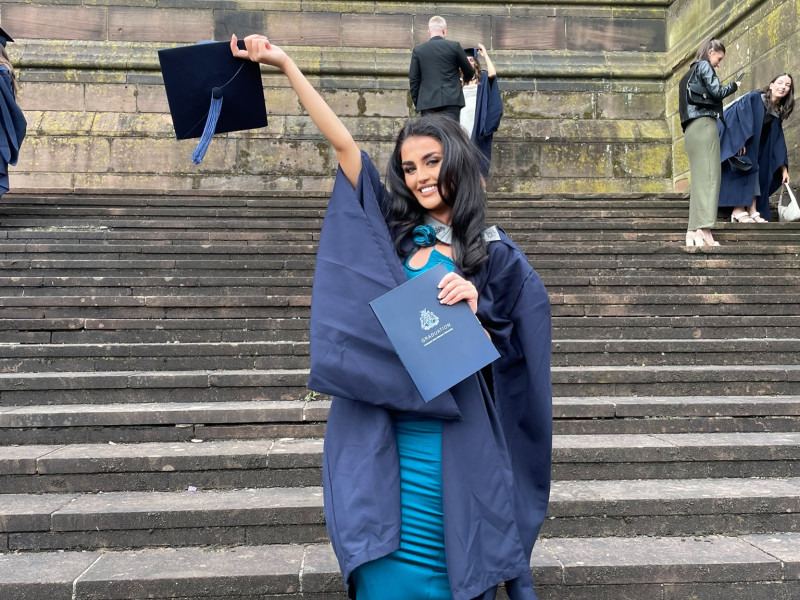
Georgia’s Story
Georgia shares her story of self-celebration, the importance of difference and how perseverance is key.
Find out more

Nerve Tumours UK Helpline
Give our Support Specialists a call on Mondays, Wednesdays & Fridays 9am-5pm. Find out more here:
Find out more